Usdjpy tradingview: A Practical Guide
Usdjpy tradingview: A Practical Guide
Usdjpy tradingview: A Practical Guide
Published: 2026-09-18 | Reviewed by: Onyx Trading Editorial Team
Usdjpy tradingview usually means analyzing the dollar-yen spot chart through TradingView, but futures traders must translate that analysis carefully. The Onyx Trading platform combines TradingView charts with professional Rithmic data, the Onyx DOM, Trade Shell, Account Manager, one-click execution, and risk-defined orders.
Key Takeaways
- USD/JPY spot and Japanese yen futures use different quotation conventions, so their charts generally move in opposite directions.
- Onyx runs with full functionality in Mac and Windows browsers, native desktop applications, and mobile applications.
- The Onyx DOM adds resting bid and offer liquidity to chart analysis, helping traders evaluate execution conditions.
- Onyx charges no platform, software, or subscription fee, although broker, exchange, market-data, and prop-firm charges are separate.
What Is usdjpy tradingview?
Usdjpy tradingview refers to viewing and analyzing the United States dollar against the Japanese yen through TradingView charts. Traders commonly follow price trends, economic announcements, support and resistance areas, and volatility. Futures traders can use those observations while recognizing that CME Japanese yen futures follow a different quotation convention.
The familiar TradingView USD/JPY market page presents how many Japanese yen are required to buy one United States dollar. A rising chart therefore represents dollar strength or yen weakness, while a falling chart represents dollar weakness or yen strength. That interpretation applies to the spot currency pair rather than every yen-linked instrument.
CME Japanese yen futures are quoted in United States dollars per yen. Consequently, their direction generally appears inverse to the conventional USD/JPY spot chart. If USD/JPY rises because the dollar strengthens against the yen, Japanese yen futures will generally fall, assuming other market factors remain consistent. Traders should confirm the selected symbol before planning an order.
The distinction matters because chart direction influences entries, protective stops, and profit objectives. Copying a bullish USD/JPY spot idea directly onto a Japanese yen futures chart may reverse the intended exposure. The CME Japanese yen futures page provides official contract information for traders researching the futures instrument.
CME Group lists the standard Japanese yen futures contract unit as 12,500,000 Japanese yen. CME Group also lists a minimum price fluctuation of $0.0000005 per yen, equivalent to $6.25 per contract. These contract statistics show why traders should verify the futures symbol, quantity, and tick value instead of transferring spot-chart price levels directly into an order.
How Does usdjpy tradingview Work?
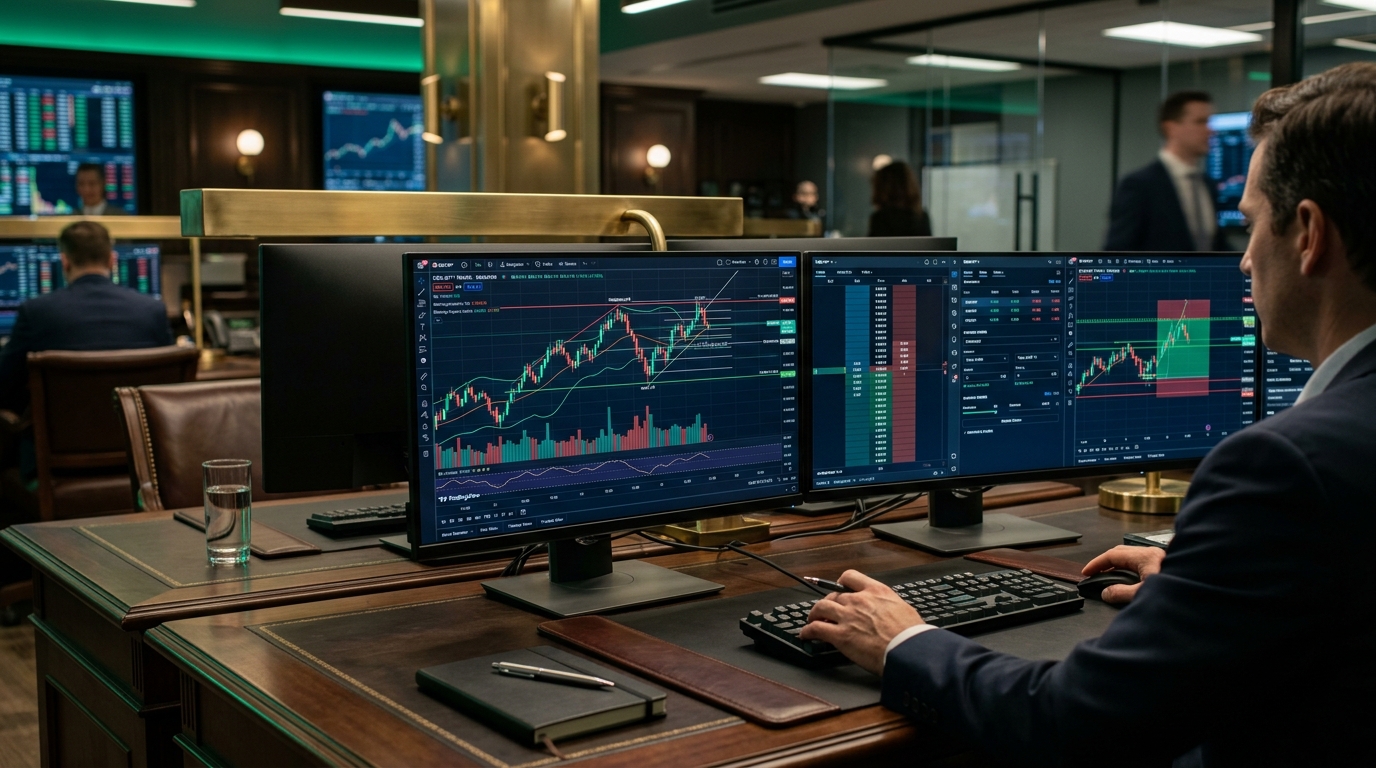
Usdjpy tradingview works by displaying historical and current price activity for the dollar-yen exchange rate through configurable TradingView charts. Traders can change intervals, draw levels, and study price behavior. Within Onyx, TradingView chart integration connects visual analysis with futures-focused execution through the Onyx DOM, Trade Shell, and Account Manager.
A trader might first identify a directional USD/JPY thesis from monetary policy, economic data, or market structure. Bank of Japan and United States Federal Reserve decisions can affect both currencies, while unexpected announcements can increase volatility. A chart records the market response, but it cannot establish whether a future price move will continue.
The next step is translating the thesis into the corresponding futures direction. Bullish USD/JPY analysis generally implies bearish Japanese yen futures exposure because the instruments use inverse quotation conventions. Bearish USD/JPY analysis generally implies the opposite. Making this conversion explicit can help prevent avoidable directional errors.
TradingView charts in Onyx provide the visual context for that translation. The Onyx DOM shows resting bid and offer size at each futures price, helping scalpers assess nearby liquidity before entering. Displayed liquidity can change, be cancelled, or be consumed quickly, so it should not be treated as a promise of execution.
Trade Shell provides an order-entry workspace, while Account Manager helps traders monitor connected accounts. One-click execution can reduce order-entry steps when conditions move quickly. OCO and bracket orders let traders structure linked exits around an entry, although slippage and fast markets can still produce fills different from the intended price. Details about these and other Onyx features explain the execution workflow.

Why Does usdjpy tradingview Matter For Futures Traders?
Usdjpy tradingview matters because many currency narratives, technical ideas, and market discussions use the spot USD/JPY convention. Futures traders must convert those observations before trading Japanese yen contracts. Combining TradingView charts with Rithmic futures data and the Onyx DOM helps separate broad directional analysis from actual futures execution conditions.
Spot analysis can provide context around trend, reaction zones, and scheduled economic events. Futures data provides the prices and depth relevant to the contract being traded. The two views can complement one another, but they are not interchangeable. Contract specifications, trading hours, liquidity, and expiration mechanics distinguish futures from the continuous spot market.
Instrument identification is often more important than adding another indicator. A technically reasonable usdjpy tradingview thesis can still lead to an unintended position if a trader selects the wrong futures contract or overlooks the inverse quotation.
Execution quality also matters to prop-firm and funded traders because evaluation rules commonly constrain losses, position sizes, or daily activity. Those rules differ among firms. Account Manager supports oversight of connected accounts, while Trade Shell, OCO and bracket orders help traders express a predefined entry and exit structure without implying any particular outcome.
The Onyx DOM is especially relevant for short-duration traders. It displays resting bids and offers by price, providing information that a chart alone does not show. Traders may use that information to evaluate spread, nearby liquidity, and order placement. Depth changes continuously, and visible size does not establish future price direction.
Onyx charges no platform, software, or subscription fee. Broker, exchange, market-data, and prop-firm charges remain separate. Avoiding this added fee may matter when a trader is trying to preserve a funded-account profit split, but lower operating costs cannot remove market risk or ensure that an evaluation will be passed.
Onyx provides full functionality in Mac and Windows browsers without an installation or VPS. Native Windows and macOS desktop applications download from the Settings page and open charts in independent windows. Onyx Mobile Trader serves iOS, and the Android application provides mobile account access.
How Do You Use usdjpy tradingview On Onyx?
To use usdjpy tradingview on Onyx, begin by separating spot analysis from futures execution. Study the USD/JPY relationship through TradingView charts, open the appropriate Japanese yen futures contract, and confirm its inverse quotation. Then use Trade Shell, the Onyx DOM, Account Manager, and risk-defined orders to plan execution.
- Define the market thesis. Identify whether the dollar-yen relationship is trending, consolidating, or reacting to scheduled information. Mark invalidation levels rather than treating an indicator signal as sufficient evidence for an order.
- Confirm the futures symbol and contract. Ensure the selected market is the intended Japanese yen futures contract. Verify that the active contract and chart direction correspond with the spot thesis before entering.
- Compare quotation directions. A long USD/JPY spot thesis will usually translate into a short Japanese yen futures thesis. Make this conversion explicitly and avoid copying spot price levels onto the futures chart.
- Read futures liquidity. Use the Onyx DOM to inspect resting bid and offer size around the planned entry. Treat displayed depth as changing information rather than certain liquidity.
- Structure the order. Use Trade Shell for entry management and consider OCO and bracket orders for linked protective and target orders. Determine acceptable risk before sending the entry.
- Monitor account exposure. Use Account Manager to observe connected accounts and open activity. Onyx account history is also accessible through rTrader Pro, the Rithmic source of record for connected Onyx accounts.
A written pre-order checklist can make the spot-to-futures conversion easier to follow. That checklist can include the USD/JPY thesis, the corresponding yen-futures direction, the active contract, order quantity, invalidation level, and maximum acceptable loss. A checklist does not remove risk, but it can support a more deliberate process.
TradingView charts provide visual context while Rithmic supplies professional futures data. Open Onyx in a browser, select the Japanese yen futures contract, confirm the quotation direction, and prepare the order through Trade Shell.
One-click trading may be useful when a prepared setup requires prompt execution, but convenience should not replace order verification. Confirm direction, quantity, contract, and order type before submission. OCO and bracket orders can organize exits, yet volatile conditions may cause slippage or prevent fills at an expected price.

What Should Beginners Know About usdjpy tradingview?
Beginners should know that usdjpy tradingview analysis does not automatically translate into a Japanese yen futures trade. The most important first step is understanding the inverse quotation. New traders should also learn contract selection, order behavior, liquidity, and loss limits before using one-click execution or trading within prop-firm rules.
Start with instrument identity rather than indicators. USD/JPY is a spot foreign-exchange quotation, while Japanese yen futures are exchange-traded derivatives with contract specifications and expirations. Continuous chart symbols may simplify historical analysis, but an executable order must reference the correct contract. Futures positions also create leveraged exposure and substantial loss risk.
Before entering a Japanese yen futures order, verify the active contract, tick value, quantity, order type, and corresponding direction of the USD/JPY thesis. Prop-firm traders should also check daily loss limits, trailing drawdown rules, position limits, restricted trading periods, and other evaluation terms before submitting an order.
Use TradingView charts to identify context, the Onyx DOM to observe futures depth, Trade Shell to prepare orders, and Account Manager to monitor account activity. OCO and bracket orders can support a defined exit structure. None of these features determines an appropriate trade size or eliminates the possibility of loss.
Before trading real capital or a funded evaluation, read the relevant prop-firm rules and futures disclosures. The CFTC educational resources explain important considerations surrounding speculative trading. Tax and regulatory rules vary; consult a licensed professional for guidance related to personal circumstances.
Frequently Asked Questions
Is usdjpy tradingview the same as Japanese yen futures?
No, usdjpy tradingview usually refers to a spot chart quoted in Japanese yen per United States dollar. Japanese yen futures are quoted in dollars per yen, so their direction generally appears inverse. They also differ in contract structure, expiration, trading venue, and the prices used for futures order execution.
Can I trade Japanese yen futures directly from TradingView charts in Onyx?
Yes, Onyx integrates TradingView charts with futures execution features. Traders can analyze a futures chart, prepare orders through Trade Shell, inspect liquidity through the Onyx DOM, and monitor activity with Account Manager. One-click trading, OCO and bracket orders provide execution choices, but every order still carries market risk.
Does Onyx charge a platform fee?
No, Onyx does not charge a platform, software, or subscription fee. Broker, exchange, market-data, and prop-firm charges are separate. This fee structure can reduce one category of trading expense for active or funded traders, although it does not reduce futures leverage, execution risk, or the possibility of account losses.
Can Mac users access Onyx without Windows or a VPS?
Yes, Onyx runs with full functionality in a Mac web browser without installing Windows or using a VPS. The native macOS desktop application downloads from the Settings page and opens charts in independent windows.
Why can USD/JPY and Japanese yen futures move in opposite directions?
They move oppositely because their quotation conventions are reversed. USD/JPY measures yen per dollar, whereas Japanese yen futures measure dollars per yen. Dollar strength typically raises USD/JPY while lowering yen futures. Market conditions can complicate short-term comparisons, so traders should inspect both instruments before selecting trade direction.
Are OCO and bracket orders enough to control futures risk?
No, OCO and bracket orders help organize linked exits, but they cannot ensure a specific fill or limit every loss. Gaps, volatility, liquidity changes, and slippage can affect execution. Traders should choose position size deliberately, verify orders in Trade Shell, and monitor exposure through Account Manager after submission.
Apply usdjpy tradingview analysis by confirming the inverse futures quotation, defining risk, and selecting an execution workflow that fits your account rules. If funded trading is part of your plan, compare the prop firms that run Onyx before choosing an evaluation.
Trading futures involves a substantial risk of loss and is not suitable for every investor. Past performance is not indicative of future results. This content is educational and is not financial or trading advice.