How a Trading Journal Supercharges Futures & Prop-Firm Performance
How a Trading Journal Supercharges Futures & Prop-Firm Performance
Published: 2026-07-31 | Reviewed by: Onyx Trading Editorial Team
A comprehensive trading journal is an essential analytical asset for active futures and prop-firm traders. By documenting trades and reviewing outcomes, traders refine strategies, manage risk, and improve their psychological edge. This is achievable without platform fees using robust, browser-based solutions like the Onyx Trading platform, transforming data into actionable insights for sustained success.
Key Takeaways
- Systematic Improvement: A trading journal provides objective data for analyzing past trades, identifying recurring patterns, and systematically refining futures trading strategies.
- Enhanced Execution: By reviewing entries and exits, traders can improve their precision in fast-paced environments like order-flow scalping on the Onyx DOM.
- Prop-Firm Compliance: Journaling is crucial for tracking specific metrics like drawdown, profit targets, and consistency, which are vital for passing prop-firm evaluations and maintaining funded status.
- Psychological Resilience: Documenting emotional states and reactions helps traders manage stress, overcome biases, and maintain discipline during high-frequency futures market movements.
Why is a Trading Journal Indispensable for Futures & Prop-Firm Traders?
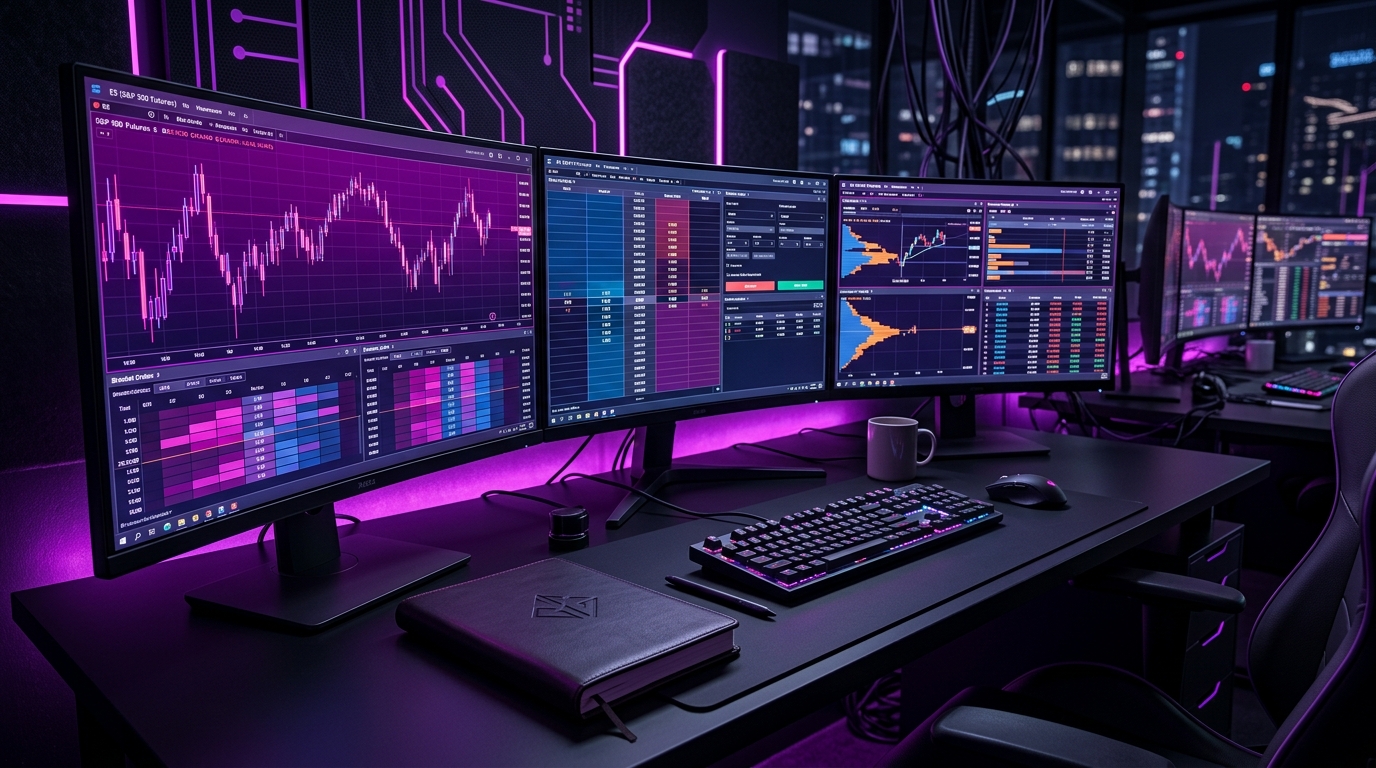
For futures and prop-firm traders, a trading journal is indispensable because this tool transforms subjective trading experiences into objective, actionable data. It provides a clear, unbiased record of every decision, helping identify profitable patterns and costly mistakes. This systematic approach is critical for meeting the strict requirements of prop-firm evaluations and optimizing profit splits in active markets like crude oil futures and spx futures, allowing traders to continuously adapt and improve their performance. Unlike relying on memory or gut feelings, a well-maintained journal offers a verifiable timeline of decisions, market conditions, and personal reactions, creating a robust feedback loop for learning.
The fast-paced nature of the futures market demands continuous self-assessment. Without a journal, traders often repeat errors, struggle to adapt to changing market conditions, and find it difficult to articulate their edge. A well-maintained journal, however, acts as a personal coaching tool, highlighting areas for strategic refinement, risk management adjustments, and psychological development. This disciplined practice is foundational for long-term success in high-frequency trading environments. It allows traders to systematically deconstruct their trades, categorize their setups, and critically evaluate the efficacy of their chosen strategies under various market scenarios. This depth of analysis is rarely achievable through casual review alone and is particularly vital when navigating complex instruments like micro futures or bond futures.
Furthermore, for those participating in prop-firm challenges, the rigorous data collection within such a journal is non-negotiable. Prop-firms demand not just profitability, but consistent, rule-bound trading. A journal provides the auditable trail necessary to demonstrate adherence to drawdown limits, maximum daily losses, and other critical parameters. It helps to prove a trader's discipline and systematic approach, which are qualities highly valued by funding providers. By documenting entry rationale, exit strategy, and real-time adjustments, traders can build a compelling case for their trading acumen, significantly enhancing their chances of securing and maintaining funded status with leading prop-firms.
How Can a Trading Journal Enhance Fast Execution and Order-Flow Scalping?
A trading journal significantly enhances fast execution and order-flow scalping by enabling meticulous post-trade analysis of entries, exits, and market reactions. When scalping pre market futures or us futures, every millisecond and tick matters. Documenting the exact conditions, timing, and order types used—like one-click trading or bracket orders on the Onyx DOM—allows traders to pinpoint inefficiencies and areas for improvement. This rigorous review helps refine reflexes and decision-making under pressure. For example, a trader might meticulously record the exact level of liquidity on the Onyx DOM at the moment of entry, how quickly their order was filled, and whether there was any slippage. Analyzing these granular details helps optimize execution speed and precision, which are paramount in order-flow trading.
For instance, when testing the Onyx DOM's one-click execution, a trader might journal whether a particular entry was too aggressive, too late, or if the order placement truly reflected their intended price. Reviewing these precise details reveals patterns in execution quality that impact overall profitability. Analyzing how specific order-flow setups performed and whether the Trade Shell was effectively utilized can lead to quicker, more precise responses in future trades, ultimately sharpening the scalping edge. I've personally found that meticulously reviewing these micro-decisions in my journal after a session with the Onyx DOM can highlight subtle patterns, like consistent slippage at certain price levels or optimal times for aggressive entries, that would otherwise go unnoticed in the heat of the moment.
Beyond individual trades, a comprehensive journal can also track how different order types perform under varying market conditions. Are market orders consistently leading to worse fills than limit orders in volatile situations? Is the use of advanced features like "cancel all orders" improving risk management during rapid market reversals? By consistently documenting and analyzing these aspects within the context of your chosen trading platform, specifically the Onyx Trading platform, traders can develop a highly refined execution methodology. This detailed self-assessment is essential for minimizing costly errors and maximizing efficiency when every tick counts in a high-frequency trading environment.
What Specific Metrics Should Prop-Firm Traders Track in Their Trading Journal?
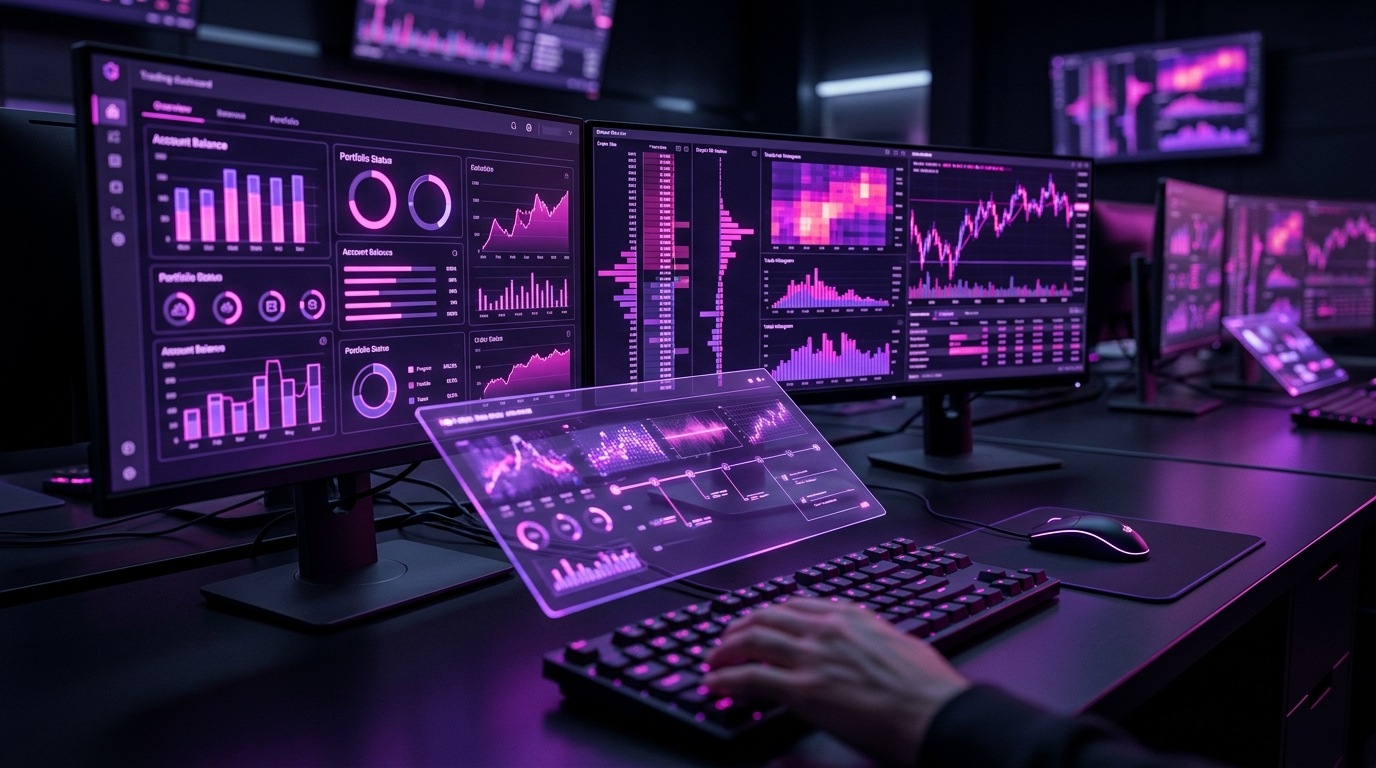
Prop-firm traders must track very specific metrics in their trading journal to ensure compliance with evaluation rules and maximize their profit potential. Beyond basic entry/exit points, essential metrics include win rate, average win versus average loss, maximum drawdown, daily profit/loss, and consistency of profitable days. Documenting the specific strategy used for each trade, the market conditions, and the time of day can reveal crucial insights into strategy efficacy and adherence to trading plans, which are paramount for passing challenges. It's not enough to simply record trades; traders must also assess the context, including news events, liquidity levels, and the overall market sentiment at the time of each decision.
Further critical metrics involve the risk-reward ratio per trade, the percentage of account capital risked, and the psychological state before and after each trade. For example, understanding why a trade on crude oil futures resulted in a higher-than-average loss due to emotional bias is invaluable. By meticulously tracking these data points within the Account Manager, traders gain a comprehensive overview of their performance against prop-firm objectives, enabling targeted adjustments to improve consistency and control drawdowns. From my experience managing prop-firm challenges, the psychological entries in this tool proved just as critical as the technical ones, helping me identify moments of emotional vulnerability that, left unaddressed, could jeopardize my funded status.
Moreover, prop-firm traders should use this record to track performance across different assets and timeframes. Is a particular strategy more effective on ES futures compared to NQ futures? Does it perform better during specific hours of the trading day? By segmenting and analyzing this data, traders can refine their focus and allocate their risk more efficiently. The journal also serves as an excellent tool for documenting rule breaches, no matter how minor, allowing for immediate corrective action and continuous improvement towards the strict compliance standards required by prop-firms. This level of detail makes the trading journal an indispensable asset for sustained success in the competitive prop-firm landscape.
Are There Effective, Free, Browser-Based Trading Journal Solutions for Futures Traders?
Yes, effective free, browser-based solutions can serve as trading journals for futures traders, although many dedicated journaling software options incur costs. An integrated approach, where journaling complements a robust trading platform, can be highly beneficial for active traders. This can potentially eliminate platform fees, allowing traders to allocate resources towards their trading activities. Platforms like Onyx Trading offer a free, web-based environment accessible in any browser on Mac or Windows, simplifying the trading workflow by removing install or VPS requirements. Such accessibility can help traders optimize their capital allocation without additional software subscriptions, which is valuable for those managing prop-firm accounts.
While some standalone journaling applications provide analytical features, they often involve subscription fees. For futures traders, particularly those engaged with volatile assets like pre market or other futures, platforms providing professional data feeds and a Depth-of-Market ladder, such as the Onyx Trading platform with Rithmic data, can be highly valuable for real-time decision-making. The efficiency of being able to trade and then immediately review performance through an integrated system, potentially without additional platform costs, can be a notable benefit. Platforms like Onyx Trading aim to provide necessary tools for active trading, allowing traders to employ their preferred journaling method alongside a robust, no-fee execution environment. Combining the execution capabilities of a platform like Onyx Trading with a diligent journaling habit is generally recognized as a sound approach for growth, especially when managing various instruments like crude oil, gold, or equity index futures.
Browser-based solutions, including platforms like Onyx Trading, offer flexibility in their compatibility with various journaling methods. Traders can use simple spreadsheets, custom databases, or third-party analytical tools. A key benefit of such platforms can be access to a professional-grade trading environment without incurring platform fees. This enables traders to allocate resources efficiently, potentially towards educational materials or advanced analytical tools, rather than just accessing a trading interface. The combination of a high-performance execution venue, especially one that is cost-free, with a diligent journaling practice can foster an effective environment for skill development and strategic refinement in the futures market.
| Feature | Onyx Trading Platform |
|---|---|
| Browser Support | ✔ (Any browser) |
| Mac Support | ✔ (Native in browser, no VPS required) |
| Depth of Market (DOM) | ✔ (Professional Rithmic DOM) |
| Data Feed | Professional Rithmic Data |
| Platform Fee Structure | No platform fee |
How Does a Trading Journal Help Manage the Psychology of High-Frequency Futures Trading?
A trading journal is a powerful tool for managing the psychology of high-frequency futures trading by providing a structured way to observe and process emotional responses. The intense pressure of market futures, especially when scalping us futures, can lead to impulsive decisions, fear of missing out (FOMO), or revenge trading. By documenting emotional states, discipline scores, and adherence to rules before, during, and after trades, traders can identify their psychological triggers and develop strategies to counteract them. This self-awareness is the first crucial step towards developing robust emotional control, which is as important as any technical skill in trading.
For example, if a trader consistently notes feelings of frustration leading to overtrading after a loss, the journal makes this pattern undeniable. This self-awareness, fostered by consistent journaling, allows for the implementation of breaks, mindfulness techniques, or stricter rule adherence. Over time, reviewing journal entries can highlight psychological improvements, reinforcing good habits and building the resilience necessary to navigate the volatile and demanding landscape of the futures market with greater emotional control. It helps traders objectively analyze instances of emotional trading, allowing them to pinpoint the exact circumstances that led to a deviation from their plan and develop specific countermeasures for future occurrences.
Moreover, this tool can serve as a personal accountability partner. By regularly reviewing documented emotional states and performance, traders can identify common cognitive biases, such as confirmation bias or loss aversion, that may be impacting their decision-making. It provides a historical record of how psychological factors have influenced profitability, enabling traders to develop personalized mental strategies. This disciplined self-reflection, when integrated with an effective trading environment like the Onyx Trading platform, can significantly strengthen a trader's mental game, fostering the calm and composed demeanor required for consistent success in high-pressure futures trading.
Frequently Asked Questions
What is a trading journal?
A trading journal is a comprehensive record of a trader's activity, documenting details like entry and exit points, trade rationale, market conditions, and emotional state. It serves as a tool for self-analysis and improvement, helping traders identify patterns in their decision-making and performance over time. This systematic approach is key to developing consistent profitability.
How often should I update my trading journal?
Ideally, a trading journal should be updated immediately after each trade or at the end of each trading session. This ensures that details are fresh in your mind, including subtle market nuances and your psychological state. Consistent, timely updates lead to more accurate data and more effective analysis, contributing to better trading outcomes. For high-frequency futures traders, even quick notes on market conditions and emotional responses are invaluable.
Can a trading journal help me pass a prop-firm evaluation?
Absolutely. A trading journal is invaluable for prop-firm evaluations. It helps you track critical metrics like drawdown limits, profit targets, and consistency, which are core requirements. By reviewing your journal, you can pinpoint areas where you deviate from rules or where your strategy needs refinement to meet the prop-firm's specific criteria. It provides objective evidence of your discipline and adherence to their strict guidelines.
Are digital trading journals better than paper ones?
Digital trading journals generally offer more advantages over paper, especially for active futures traders. They allow for easier data entry, automated calculations, powerful filtering, and quick search capabilities. Many digital solutions also integrate with trading platforms or offer advanced analytical features, making comprehensive performance review more efficient and insightful. The ability to quickly analyze historical data is a significant benefit.
What should I include in my trading journal for futures trading?
For futures trading, include specific contract details, timeframes, order types used, and the Rithmic data context (e.g., strong bid/offer, order-flow signals). Also note your entry/exit rationale, risk management parameters, profit/loss, and a self-assessment of your emotional state and adherence to your trading plan. This level of detail is crucial for high-frequency analysis, especially when reviewing execution on the Onyx DOM.
How can journaling specifically help with real-time execution and order flow analysis?
For real-time execution and order flow analysis, documenting precise details like entry/exit timing, order types, and market depth conditions (e.g., on the Onyx DOM) allows for granular post-trade review. This helps identify execution inefficiencies, refine reflexes, and optimize decision-making under pressure, turning observations into actionable improvements for scalping and high-frequency strategies.
Mastering the futures market requires dedication, discipline, and the right tools. A robust journal, combined with a powerful, no-fee platform like Onyx Trading, can provide the analytical edge you need. To explore more features and stay updated with the latest advancements, visit the Onyx Trading news section. Ready to take control of your trading performance? Sign up for a free Onyx Trading account today and begin your disciplined journey to better trading.
Trading futures involves a substantial risk of loss and is not suitable for every investor. Past performance is not indicative of future results. This content is educational and is not financial or trading advice.