Is Day Trading Worth It? A Futures Cost Test
Is Day Trading Worth It? A Futures Cost Test
Is Day Trading Worth It? A Futures Cost Test
Published: 2026-09-16 | Reviewed by: Onyx Trading Editorial Team
The question “is day trading worth it” depends on whether trading gains can exceed commissions, data charges, slippage, evaluation expenses, and losses. The Onyx Trading platform has no platform fee and provides Rithmic data, Onyx DOM execution, Trade Shell, Account Manager, and integrated TradingView charts.
Key Takeaways
- Futures day trading may be worthwhile only when a repeatable trading edge exceeds every direct and indirect cost.
- Micro contracts reduce contract exposure, but leverage, commissions, slippage, and rapid losses still require strict controls.
- Funded futures trading can reduce personal capital requirements, although evaluation fees and firm rules affect the calculation.
- Onyx has no platform, software, or subscription fee and runs with full functionality in Mac and Windows browsers.
Is Day Trading Worth It in the Futures Market?
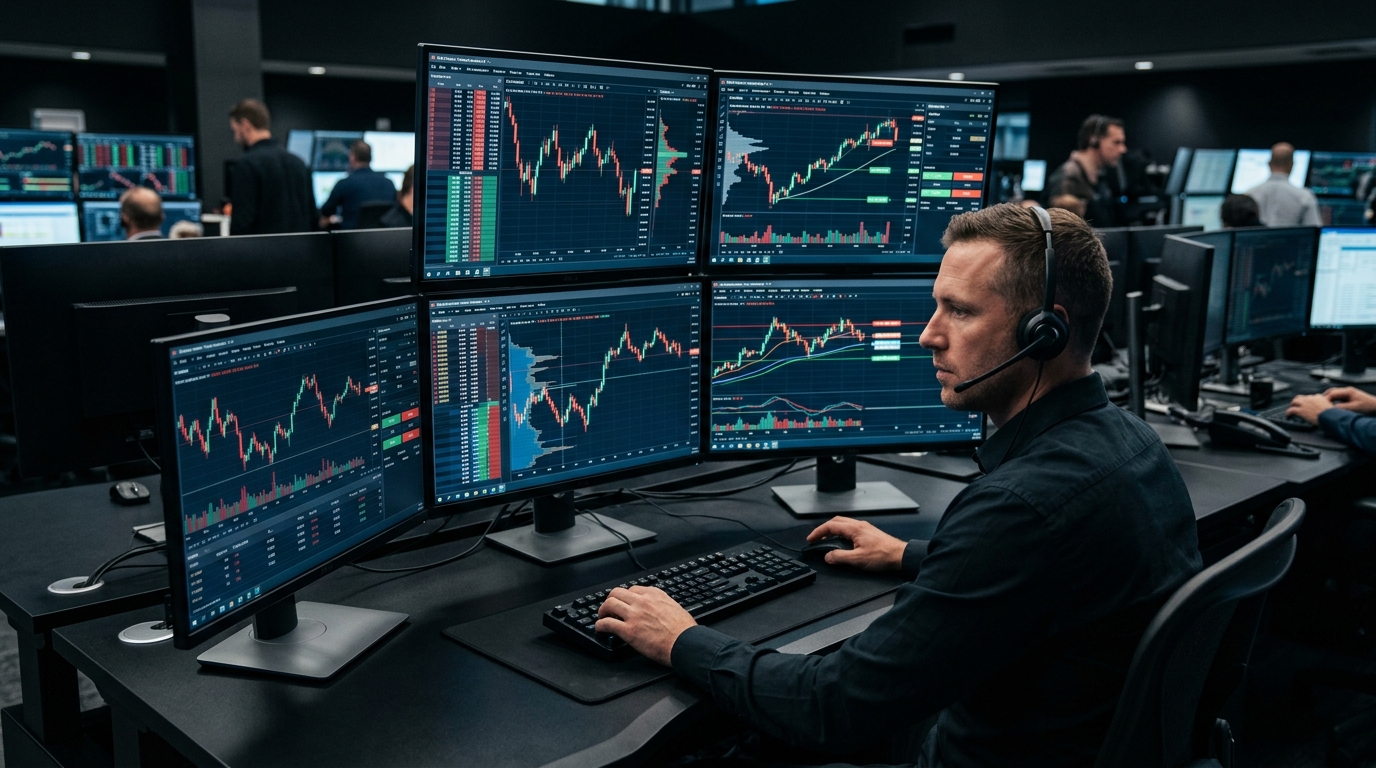
Futures day trading may be worthwhile when a documented edge remains positive after commissions, exchange and data charges, slippage, platform expenses, and losing trades. Evaluating whether day trading makes economic sense requires a net-cost calculation, not a judgment based only on gross winning trades or occasional profitable sessions.
A useful cost test begins with average gains and losses rather than account balance alone. Traders should compare their expected gross trading result with commissions, market-data charges, execution slippage, and recurring software costs. A strategy with positive gross results may become negative when frequent entries create excessive friction.
Leverage makes the futures market capital-efficient, but it also magnifies mistakes and adverse price movements. The CFTC’s futures education emphasizes that speculative futures trading involves substantial risk. Position size, stop placement, and a defined daily loss limit remain important even when execution expenses are low.
Futures activity can accelerate around economic releases, market openings, and unexpected news. Resting liquidity may change quickly, producing fills that differ from the intended price. Any assessment of “is day trading worth it” should therefore include realistic slippage assumptions instead of treating every historical chart level as an obtainable fill.
Onyx removes one recurring expense because it has no platform, software, or subscription fees. Broker commissions, exchange fees, market data, and prop-firm charges remain separate. Lower overhead cannot create an edge, but it may preserve more of an existing edge for normal variance and trading costs.
Separating fixed expenses from trade-level costs makes performance records easier to evaluate. Traders can review each category without assuming that a low-cost interface will offset inconsistent execution or uncontrolled risk.
How Do Micro Contracts Change Futures Day Trading?
Micro futures contracts make day trading more scalable by providing smaller exposure than corresponding E-mini contracts. They allow traders to adjust position size more gradually, practice execution discipline with lower nominal exposure, and place stops according to market structure. However, smaller contracts do not remove leverage, volatility, commissions, or loss risk.
CME Group explains that its Micro E-mini equity index futures are one-tenth the size of corresponding E-mini contracts. That smaller multiplier can help traders align contract quantity with a predetermined monetary risk limit rather than accepting the larger exposure of an E-mini position.
Micro contracts can improve sizing flexibility, but transaction costs deserve close attention. A trader using several Micro contracts may incur more per-contract commissions than someone expressing comparable exposure through one larger contract. Whether day trading with Micros is worthwhile depends on the strategy’s average trade value after those contract-level costs.
Onyx DOM displays resting bid and offer size at each price, helping scalpers assess visible liquidity before entering a Micro contract. One-click trading reduces order-entry steps, while OCO and bracket orders connect protective and profit-taking instructions. These functions support an organized execution process, although they cannot prevent slippage or assure a particular fill.
Micro contracts are most useful when their smaller size improves risk control rather than encourages excessive trading. Traders can compare planned stop distance, contract quantity, and total commissions before entry. If the expected opportunity is small relative to friction, taking more trades or adding contracts does not improve the underlying economics.
Is Day Trading Worth It With a Funded Account?
Funded futures trading may be worthwhile for traders who can follow evaluation and risk rules while retaining enough net gains after fees and profit sharing. The calculation should include evaluation costs, resets, account restrictions, payout conditions, and trading friction rather than focusing only on the advertised account size.
A funded account can reduce the personal capital committed to market exposure, but it introduces contractual constraints. Daily loss limits, trailing drawdowns, permitted products, position limits, and payout requirements can shape execution decisions. Traders should calculate whether their normal strategy fits those rules before paying for repeated evaluations.
The economics become especially important when evaluation attempts accumulate. A strategy that requires frequent resets may have negative results despite occasional payouts. A trader should compare total fees paid, permitted withdrawals, retained profit share, and all trading costs over a meaningful sample of trades.
Account Manager provides centralized account oversight, while Trade Shell supplies an order-entry workspace for active execution. Onyx DOM, OCO orders, and bracket orders can help a funded trader define entries and exits consistently. Trade history for Onyx accounts is also accessible through rTrader Pro, the Rithmic source of record for those accounts.
No interface can make a trader pass an evaluation or preserve a funded account. The cost advantage of Onyx is that no platform, software, or subscription fee is deducted before a trader assesses the remaining economics. Prop-firm fees, market data, commissions, exchange charges, and contractual profit splits remain separate.
Firm rules, drawdown calculations, position restrictions, and payout terms directly affect funded-account economics. Traders should compare these conditions with their normal futures strategy before paying for an evaluation.
How Do Platform Fees and Data Costs Affect Scalping?
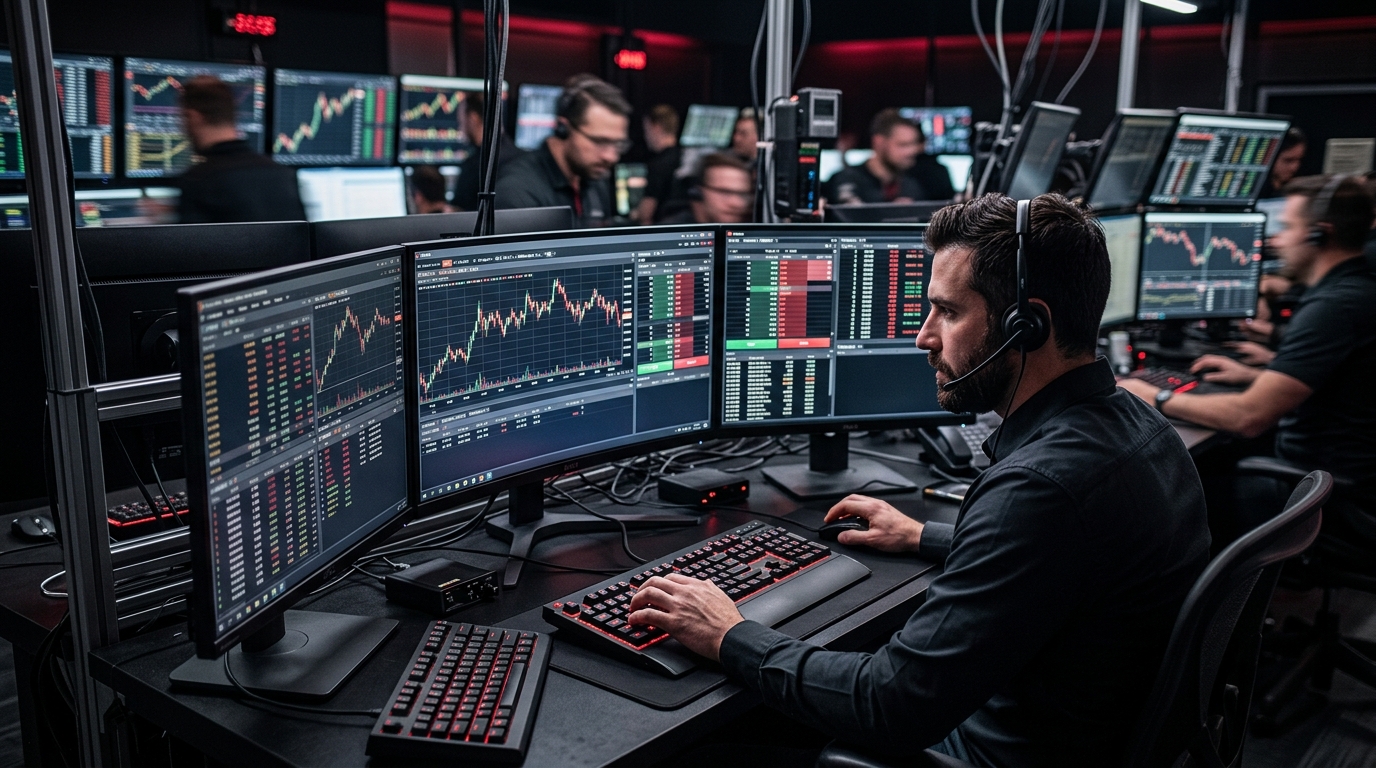
Platform fees and data costs directly raise the break-even threshold for scalping because each trade usually targets a comparatively small movement. When deciding “is day trading worth it,” traders should subtract recurring access charges and per-trade friction from gross results. Removing a subscription helps the calculation, but execution quality and discipline remain decisive.
Scalpers should separate fixed expenses from variable expenses. A monthly subscription or market-data charge applies even during an inactive period, while commissions and slippage increase with trading volume. Evaluation fees may add another fixed or repeated cost for prop traders. These categories should not be blended into gross profit.
Onyx and NinjaTrader Cost Structure
| Comparison | Onyx | NinjaTrader |
|---|---|---|
| Browser support | Full functionality in Mac and Windows browsers | NinjaTrader Web runs in Mac and PC browsers with a reduced feature set compared with Desktop |
| Mac support | Runs in Mac browsers and includes a native macOS desktop application | NinjaTrader Web runs in Mac browsers; NinjaTrader Desktop is Windows-only and requires virtualization on Mac |
| Depth of Market | Onyx DOM with resting bid and offer size and one-click execution | NinjaTrader provides Depth-of-Market functionality, while the web feature set is reduced compared with Desktop |
| Data feed | Professional Rithmic data feeds | Connection and account dependent |
| Platform fee | No platform, software, or subscription fee | Paid license tiers exist |
Onyx does not charge a platform, software, or subscription fee. Its professional Rithmic feed powers Onyx DOM and associated execution functions. Broker, exchange, market-data, and prop-firm charges are separate, so traders should include those expenses when calculating the all-in cost of every contract and session. Additional capabilities are outlined on the Onyx features page.
TradingView integration gives users familiar charting for market analysis. Traders can examine price structure on TradingView charts, then use Trade Shell or Onyx DOM for execution. Account Manager adds account oversight, while OCO and bracket orders help define linked exits before market conditions accelerate.
Lower fixed costs improve the arithmetic but do not answer the broader question by themselves. A scalper still needs average favorable movement to exceed commissions, bid-offer friction, slippage, and losses. Removing a software subscription preserves more net performance, but it cannot transform an unprofitable entry process into a durable edge.
Can Browser-Based DOM Execution Make Day Trading Viable?
Browser-based DOM execution can make futures day trading more practical for Mac and Windows users by removing installation and VPS requirements. Viability still depends on strategy and risk control, but full browser functionality, one-click execution, Rithmic data, and no platform fee reduce certain technical and recurring-cost barriers for active traders.
Onyx DOM shows resting bid and offer size at each displayed price level. A scalper can use that ladder to assess nearby liquidity, select a price, and send an order with one click. Displayed liquidity can change or be cancelled, so order-book size should inform decisions rather than serve as a prediction.
OCO and bracket orders connect exit instructions to an open position or entry workflow. If one linked OCO order executes, the other is cancelled. Bracket orders can organize a protective stop and profit target around a position, helping traders establish risk parameters without relying entirely on manual reactions during a fast market.
Onyx runs with full functionality in Mac and Windows browsers, with no installation or VPS required. Onyx also includes native Windows and macOS desktop applications through the Settings page, and they can open charts in independent windows. Onyx Mobile Trader runs on iOS, and Onyx includes an Android application. The workspace opens through the Onyx application.
Trade Shell supports focused order entry, Account Manager centralizes account oversight, and TradingView integration provides chart-based market analysis. Traders can move between chart context and Onyx DOM execution without paying a platform subscription. For Mac users, this removes the need to run a Windows desktop environment merely to use full futures functionality.
A simpler workflow may make it easier to follow a written process, but convenience does not establish profitability. When asking “is day trading worth it,” traders still need to account for market risk, execution uncertainty, losing periods, and whether their records support a credible trading edge.
Frequently Asked Questions
Is day trading worth it for futures traders?
The answer to “is day trading worth it” depends on whether a repeatable edge exceeds commissions, exchange and data charges, slippage, losses, and account expenses. Futures leverage can magnify both gains and losses, so traders need realistic records, controlled position sizing, and predefined risk limits.
Does Onyx charge platform or software fees?
No, Onyx does not charge a platform, software, or subscription fee. Broker commissions, exchange charges, market-data costs, and prop-firm evaluation or account fees are separate. Traders should include those external expenses when assessing total costs because the absence of an Onyx fee does not make futures execution costless.
Can I trade futures through Onyx on a Mac?
Yes. Onyx runs with full functionality in a Mac browser without Windows virtualization or a VPS. Onyx also includes a native macOS desktop application through the Settings page that can open charts in independent windows. Mac and Windows browsers provide the same full functionality.
Do Micro futures make day trading safer?
No. Micro futures do not make day trading inherently safe. Their smaller contract multiplier provides more precise position sizing and lower nominal exposure than corresponding E-mini contracts, but leverage, volatility, commissions, and slippage remain. Traders can still incur substantial losses through excessive size, poor stops, or repeated entries.
Can a funded account reduce the capital needed for futures trading?
A funded account may reduce the trader’s personal capital commitment, but evaluation fees, drawdown rules, payout conditions, and profit sharing affect its value. A funded arrangement may be economically useful when the trader’s normal strategy fits the firm’s restrictions and produces positive net results after every applicable cost.
Do browser-based DOM tools ensure faster or better fills?
No. Browser-based DOM tools do not ensure faster or better fills. Onyx DOM provides one-click order entry and displays resting bid and offer size through Rithmic data, but liquidity can change immediately. Order type, queue position, volatility, connectivity, and counterparties in the market can affect execution price and fill probability.
If your assessment of “is day trading worth it” includes funded-account costs, review each firm’s evaluation rules, fees, drawdown structure, and payout terms before deciding whether the model fits your futures strategy and risk tolerance.
Trading futures involves a substantial risk of loss and is not suitable for every investor. Past performance is not indicative of future results. This content is educational and is not financial or trading advice.